
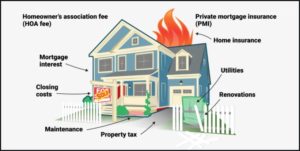
When buyers begin thinking about affordability, the purchase price is usually the number that receives the most attention. That makes sense, because it determines the size of the mortgage, the down payment and much of the monthly carrying cost. The difficulty is that the purchase price does not tell the whole financial story. By the time the transaction closes, the buyer may also be responsible for land transfer tax, legal costs, inspections, insurance, lender requirements, closing adjustments and other expenses that were not obvious when the property first appeared on the market.
For that reason, I prefer to think about affordability in broader terms. The question is not simply whether the buyer can qualify for the mortgage required to purchase the property. It is whether the buyer understands the total amount of cash the transaction is likely to require, whether those funds will be available when needed and whether enough financial flexibility will remain after closing.
That distinction matters because a buyer can be approved for a mortgage and still be unprepared for the full cost of completing the purchase.
The Purchase Price Is Only One Part of the Commitment
The first additional cost buyers usually encounter is the deposit. Although the deposit ultimately forms part of the purchase price, it is normally required very early in the transaction, often before the buyer has arranged the balance of the down payment or moved funds from other investments.
That timing can be important. A buyer may have sufficient net worth to complete the transaction but still have difficulty if the required funds are not liquid when the deposit becomes payable. The same issue can arise later with the balance of the down payment and closing funds, particularly where savings are invested, tied to another property or dependent on the completion of another transaction.
This is why cash flow and affordability are not exactly the same thing. It is possible to be financially capable of buying a property and still need careful planning around when funds will actually be required.
The more tightly a buyer is operating against their available cash, the more important that planning becomes.
Financing Can Change the Cost of the Purchase
Mortgage financing is another area where the final cost can differ from what the buyer first expects.
Most buyers begin by looking at the interest rate and monthly payment, but lenders are also concerned with the property itself. A pre-approval does not necessarily mean that a lender has approved every property the buyer may later choose.
Once an offer is accepted, the lender may require an appraisal. If the appraised value comes in below the purchase price, the lender may base the mortgage on the lower value. The buyer may then be required to contribute more cash than originally anticipated in order to close the transaction.
Where the buyer has a smaller down payment, mortgage default insurance may also form part of the financing structure. The premium is often added to the mortgage rather than paid entirely in cash, but it still increases the amount being financed and therefore increases the long-term cost of the purchase.
Private or alternative financing can introduce additional lender, brokerage or administrative fees. In those situations, the buyer should understand the complete financing arrangement rather than evaluating the mortgage on the interest rate alone.
The broader advisory point is that mortgage approval and purchase affordability are related, but they are not the same thing. Financing may determine how the property can be purchased, while the buyer still needs to understand the full amount of capital the transaction will require.
Due Diligence Is Part of the Cost of Making a Better Decision
Some buyers look at inspections and other forms of due diligence as expenses that can be avoided, particularly in competitive markets. I think that is the wrong way to frame the issue.
The purpose of due diligence is not to add cost to the transaction. It is to help the buyer understand what they are committing to before the opportunity to investigate disappears.
A home inspection may identify issues with the structure, roof, electrical system, plumbing or mechanical equipment. A condominium purchase may require review of the status certificate and corporation documents. An older property may justify further investigation of particular systems, while a rural property may require attention to wells, septic systems, access or boundaries.
Not every property requires every possible investigation, and the scope should be proportionate to the property itself. The important point is that a buyer should not eliminate reasonable due diligence simply because the investigation costs money.
Spending money to identify a material issue before becoming firm can be very different from discovering that same issue after closing, when the cost and the options available to the buyer may be very different.
Legal Costs Are Part of Completing the Ownership Transfer
The legal work involved in closing is another area that buyers sometimes underestimate because most of it occurs after the Agreement of Purchase and Sale has been signed.
The lawyer is responsible for helping complete the transfer of ownership, reviewing title, registering the transfer and mortgage documents, dealing with closing funds and addressing title-related matters that arise before completion. Legal fees are therefore only one component of the final legal bill. There can also be registration costs, searches, disbursements and title insurance.
For a straightforward residential purchase, those costs may be reasonably predictable. More complicated transactions can require additional work, particularly where there are title issues, unusual financing arrangements, multiple owners or other complications.
I generally think it is better for buyers to obtain an estimate from their lawyer early in the process rather than treat legal costs as an unknown amount that will somehow be dealt with on closing day.
The legal work is not simply administrative. It is part of making sure that the ownership interest being transferred is the one the buyer agreed to purchase.
Land Transfer Tax Can Be a Significant Closing Expense
Land transfer tax is often one of the largest additional cash costs associated with a purchase.
Ontario buyers may be responsible for provincial land transfer tax, while buyers purchasing within Toronto may also be subject to the municipal land transfer tax. First-time buyers may qualify for rebates if the applicable conditions are satisfied.
Because the tax is tied to the purchase price, it can become significant as the price of the property increases.
This is one reason I believe land transfer tax should be considered before a buyer decides on the maximum amount they are prepared to spend. A buyer may be comfortable with the mortgage payment at a certain purchase price but discover that the tax, legal costs and other closing expenses consume considerably more cash than expected.
That can materially change how comfortable the overall purchase feels.
HST Requires Attention to the Type of Property and Transaction
HST is another area where assumptions can be expensive.
Most conventional resale residential properties are not subject to HST on the purchase price in the same way as new construction, but new homes and certain other transactions can involve HST and rebate issues. The treatment can also become more complicated where the property is being acquired for investment, business use or another purpose that changes the tax analysis.
The important point is that buyers should not assume the tax treatment based simply on the appearance of the property or the way the transaction has been marketed.
Where HST may apply, the buyer should obtain appropriate legal or tax advice before relying on the net purchase cost.
The earlier that issue is identified, the more useful the advice becomes.
Closing Adjustments Can Change the Final Amount Due
The final amount required on closing may also be affected by adjustments between the buyer and seller.
If the seller has prepaid property taxes, utilities, condominium common expenses or another cost that benefits the buyer after closing, the buyer may need to reimburse the seller for the appropriate portion. Other adjustments may operate in the buyer’s favour.
These amounts are normally calculated by the lawyers, but they still affect the cash required to complete the transaction.
For that reason, I generally caution buyers against committing every available dollar to the down payment. Even when the major costs have been estimated, smaller adjustments can still change the final amount needed on closing.
A reasonable financial buffer can make the closing process much less stressful.
Insurance Should Be Investigated Before It Becomes a Closing Problem
Property insurance is another cost that is often treated as routine until something about the property makes it less routine.
Most lenders will require proof of insurance before advancing mortgage funds. For many homes, arranging coverage is straightforward. For older or unusual properties, however, issues such as electrical systems, heating systems, roof condition, prior claims or other characteristics may affect availability or cost.
That makes insurance more than a post-purchase administrative task.
If there is any reason to think the property may be difficult or expensive to insure, it is better to investigate while the buyer still has contractual flexibility.
An insurability problem can become a financing problem as well, because the lender may refuse to advance funds without acceptable coverage in place.
The Costs Continue After Closing
One of the reasons buyers can underestimate the financial commitment is that closing costs receive attention while the first year of ownership often does not.
After closing, the buyer may still face moving expenses, utility setup, furniture, appliances, window coverings, repairs and maintenance. Condominium owners begin paying monthly common expenses immediately, while freehold owners assume responsibility for the ongoing cost of property taxes, insurance, utilities and upkeep.
The first year can also reveal expenses that were not obvious before possession. A furnace may need servicing, a roof repair may become necessary, or the buyer may discover that owning the property requires tools, equipment or maintenance services they did not previously need.
None of those costs necessarily makes the purchase a poor decision. They simply form part of the transition from buying the property to actually carrying it.
That is why I prefer buyers to think beyond closing day when they assess affordability.
Maximum Mortgage Qualification Is Not the Same as Comfortable Affordability
One of the most important decisions a buyer can make is how much of their borrowing capacity they actually want to use.
A lender may determine that the buyer qualifies for a particular mortgage amount, but that does not automatically mean that purchasing at the maximum amount is the right financial decision.
A buyer who uses nearly all available savings for the down payment and closing costs may have very little flexibility remaining for an unexpected repair, an income interruption, higher interest costs or another unforeseen expense. A buyer who purchases somewhat below their maximum may retain greater financial resilience after closing.
There is no universal answer because every buyer’s income, savings, obligations and tolerance for risk are different. What matters is understanding that lender qualification is primarily a financing decision, while comfortable affordability is a broader household financial decision.
Those two numbers do not always have to be the same.
Professional Insight
The strongest purchase is not necessarily the most expensive property a buyer can qualify to purchase. Preserving flexibility after closing can be just as important as assembling the funds required to get there.
Investment Buyers Need to Look Beyond Acquisition Costs
The same principle becomes even more important when the property is being purchased as an investment.
An investor should consider not only the purchase price and mortgage, but also the total capital required to acquire and operate the property. Land transfer tax, legal fees, financing costs, inspections and immediate repairs all affect the amount invested before the property begins producing a return.
After closing, the analysis may also need to include property taxes, insurance, utilities, maintenance, management costs, vacancy, repairs and future capital expenditures.
If those costs are excluded from the calculation, the projected return can look much stronger than the actual investment is likely to produce.
That is why I believe investment decisions should be based on the economics of owning the property, not simply the economics of buying it.
Understand the Full Financial Commitment Before You Become Firm
Buying a home is not simply a decision about whether the purchase price feels affordable.
It is a decision about the total financial commitment created by the transaction.
The buyer may need to plan for the deposit, down payment, financing costs, due diligence, legal fees, land transfer tax, closing adjustments, insurance and the immediate expenses that begin once ownership changes hands. Depending on the property and the transaction, there may also be tax, financing or property-specific issues that require further investigation.
Not every buyer will incur every possible cost, and not every transaction requires the same level of analysis. The important point is to identify the likely financial obligations early enough that they can influence the decision.
A buyer who understands the full cost of the purchase is in a much better position to decide how much to spend, how much cash to preserve and what conditions or investigations remain appropriate before the agreement becomes firm.
For me, professional advisory is about providing clients with the information they need to make informed decisions, because smarter real estate decisions lead to better outcomes.
Related Articles & Resources
 Working With A Realtor
Understanding the RECO Information Guide and Your Representation Options in Ontario Real Estate
Flexible Representation Options Exist in Ontario Real Estate
Why Proper Representation Agreements Protect Consumers
Is It Okay to Have Multiple Real Estate Agents?
Professional Representation Has Real Value
Your REALTOR® is Asking Questions Because…it’s the Law
“If you require professional guidance regarding representation structure, transaction strategy, commercial leasing, investment property, due diligence, or real estate advisory services, consultation and representation options may be available depending on your objectives and circumstances.”