

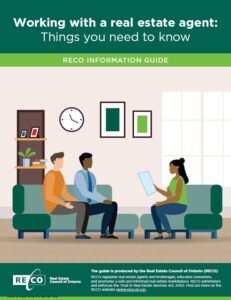
The RECO Information Guide is designed to help Ontario buyers and sellers understand how real estate representation works before they receive services or assistance from an agent. Whether you are buying a home, selling an investment property, leasing commercial space or considering another real estate transaction, one of the first decisions is how you wish to be represented.
In Ontario, real estate professionals are required to provide consumers with the RECO Information Guide before discussing confidential information, providing services, or entering into a representation relationship. While many people view the guide as another document to review or sign, it serves a much more important purpose.
It helps consumers understand the different ways they may work with a real estate brokerage and the rights, responsibilities, and professional obligations associated with each representation option. The guide helps consumers better understand:
- what representation means,
- the duties owed to clients,
- the risks of representing yourself,
- and the differences between brokerage representation, designated representation, and self-representation.
Understanding these choices before making important real estate decisions allows consumers to select the level of professional support that best aligns with their objectives, experience, and the complexity of their transaction. This is important because the type of support you choose can significantly affect:
- the services you receive,
- confidentiality protections,
- negotiation guidance,
- loyalty obligations,
- and the level of professional advice available throughout a transaction.
Why the RECO Information Guide Matters
Buying, selling, leasing, or investing in real estate often involves significant financial commitments, legal obligations, and important business decisions. Before discussing properties, negotiating offers, or sharing confidential information, consumers should understand how their relationship with a brokerage will operate.
The RECO Information Guide explains those relationships in plain language. It outlines the different representation options available under Ontario’s real estate legislation and helps consumers make informed decisions before the transaction begins.
Professional Insight
Representation is often viewed as something that becomes important during negotiations. In reality, the choice of representation influences every stage of a transaction—from the advice you receive and the information you share to confidentiality, negotiations, documentation, and ongoing professional support.
What Is a Client Relationship?
When you become a client of a real estate brokerage, you enter into a representation agreement with the brokerage.
As a client, the brokerage and/or designated representative owe you important legal and professional duties, including:
- promoting and protecting your best interests,
- confidentiality,
- disclosure obligations,
- avoiding conflicts of interest,
- loyalty,
- and providing professional advice and guidance throughout the transaction.
This relationship allows the brokerage or designated representative to:
- provide recommendations,
- negotiate in your best interests,
- advise you on pricing and strategy,
- discuss risks and opportunities,
- and assist with transaction decisions.
For many consumers, this is the relationship they expect when working with a REALTOR®.
What Is a Self-Represented Party?
Under TRESA, if you choose not to become a client of a brokerage, you may instead proceed as a self-represented party.
This means:
- you are representing your own interests,
- you are not receiving representation,
- and the brokerage does not owe you the same duties owed to a client.
The RECO Information Guide specifically explains that self-represented parties face important risks because they are navigating the transaction without professional representation while the other party may still be receiving advice and guidance from their own representative.
A self-represented party is responsible for protecting their own interests, which may include:
- determining value,
- reviewing transaction terms,
- preparing or reviewing agreements,
- understanding conditions,
- evaluating risks,
- and negotiating terms independently.
Consumers should carefully consider whether they fully understand the risks and obligations before proceeding without representation.
Important Difference: Assistance Is Not Representation
One of the most misunderstood concepts under TRESA is that a real estate agent may still provide limited assistance to a self-represented party while legally representing the client on the other side of the transaction.
However, this does NOT create a client relationship.
This is extremely important for consumers to understand.
If the agent represents the seller, for example:
- the agent’s duty is to the seller,
- not to the buyer who is self-represented.
Similarly, if the agent represents the buyer:
- the agent’s duty is to the buyer,
- not to the self-represented seller.
This means the self-represented party should not assume:
- the agent is protecting their interests,
- advocating for them,
- or providing strategic advice on their behalf.
The RECO Information Guide also explains that anything shared with the agent may need to be disclosed to the agent’s client where required in the client’s best interests.
For example:
- motivation to buy or sell,
- preferred pricing,
- negotiating flexibility,
- or preferred conditions
may not remain confidential.
Brokerage Representation vs Designated Representation
TRESA also introduced designated representation in Ontario effective December 1, 2023.
Consumers now may encounter two primary representation structures.
Brokerage Representation
Under brokerage representation:
- the brokerage and all of its agents represent the client.
This means the entire brokerage owes duties to the client.
One agent may act as the primary contact, but legally the brokerage itself represents the client relationship.
Designated Representation
Under designated representation:
- one or more specifically identified agents are designated to represent the client.
The designated representative owes duties directly to the client, while other agents within the brokerage must treat the client impartially and objectively.
Designated representation was introduced to help reduce some of the complications associated with multiple representation situations.
Consumers should ask their brokerage:
- what type of representation is being offered,
- how it works,
- and what impact it may have on the transaction.
Comparing Your Representation Options
Understanding the practical differences between these relationships is often easier than understanding the legal terminology.
| Consideration | Designated Representation | Self-Represented Party |
| Professional Advice | ✓ Comprehensive advice and guidance | Limited factual information only |
| Fiduciary Duties | ✓ Owed to the client | Not provided |
| Confidentiality | ✓ Protected | Limited protections |
| Negotiation Assistance | ✓ Yes | No advocacy |
| Strategic Recommendations | ✓ Yes | Consumer makes independent decisions |
| Ongoing Transaction Management | ✓ Yes | Limited administrative assistance where permitted |
While self-representation remains an important consumer choice, it also requires consumers to assume greater responsibility for evaluating information and making decisions independently.
Understanding Multiple Representation
Multiple representation occurs when:
- a brokerage or designated representative represents more than one client with competing interests in the same transaction.
Examples may include:
- representing both buyer and seller,
- or representing multiple competing buyers on the same property.
Under Ontario law, multiple representation generally requires informed written consent from all affected clients before proceeding.
Consumers should understand that agreeing to multiple representation can significantly change:
- the advice available,
- negotiation limitations,
- confidentiality restrictions,
- and the brokerage’s ability to advocate fully for one client over another.
The RECO Information Guide explains that in multiple representation situations:
- brokerages must remain objective and impartial,
- cannot maintain undivided loyalty,
- and cannot advise clients on specific negotiating positions such as pricing or offer strategy.
Consumers uncomfortable with multiple representation may refuse consent and discuss alternatives with the brokerage.
Representation Agreements Matter
Representation agreements define the professional relationship between consumers and their brokerage. They establish the services being provided, the responsibilities of each party, the duration of the relationship, and other important contractual terms.
These agreements are intended to create clear expectations before significant decisions are made.
Professional Insight
Many consumers focus primarily on commission when reviewing a representation agreement. In practice, one of the more important considerations is understanding the scope of representation itself—what services will be provided, how confidential information will be protected, and what level of professional guidance you can expect throughout the transaction.
Questions to Consider Before Choosing Representation
Every real estate transaction is different. Before deciding how you wish to proceed, consider asking yourself:
- How experienced am I with real estate transactions?
- How comfortable am I reviewing contracts and legal documents?
- Do I want professional advice throughout negotiations?
- How important is confidentiality?
- Is this transaction relatively straightforward or unusually complex?
- Would independent guidance improve my confidence when making important decisions?
There are no universally correct answers. The objective is selecting the level of representation that best supports your particular circumstances.
How Professional Representation Supports Better Decisions
Professional representation involves considerably more than showing properties or preparing paperwork.
Throughout a transaction, experienced representation can assist by:
- Explaining available options and their implications.
- Identifying potential risks before decisions are made.
- Coordinating negotiations between the parties.
- Helping interpret complex documentation.
- Managing transaction timelines and required documentation.
- Facilitating communication between buyers, sellers, landlords, tenants, lenders, lawyers, inspectors, and other professionals.
- Providing objective guidance when unexpected issues arise.
The objective is not simply to complete a transaction.
It is to help consumers make informed decisions with confidence throughout the process.
Professional Insight
One of the greatest benefits of professional representation is not having someone make decisions for you. It is having an experienced advisor help you understand your options before you make those decisions yourself.
Informed Consumers Make Better Decisions
The RECO Information Guide was introduced to improve transparency and help consumers better understand their options when working with Ontario real estate brokerages.
Every consumer’s situation is different.
Some consumers may prefer:
- full representation,
- limited service arrangements,
- or independent self-representation.
However, consumers should fully understand the differences between these relationships before proceeding.
Understanding:
- who represents you,
- whose interests are being protected,
- what duties are owed,
- and what services are actually being provided
can have a significant impact on the outcome of a transaction.
Final Thoughts
Taking a few minutes to understand those options at the beginning of a transaction can help establish clear expectations and ensure the level of representation selected aligns with your individual objectives.
Whether purchasing your first home, negotiating a commercial lease, selling an investment property, or evaluating a complex real estate opportunity, understanding your representation options is an important first step toward making informed decisions.
Every consumer deserves to understand not only the services available, but also how those services support successful real estate outcomes.
Because choosing representation is not simply about selecting a brokerage.
It is about selecting the level of professional guidance that best supports your real estate decisions.
Guidance for Smarter Real Estate Decisions.
Written by Rodney Harvey, Broker of Record at Konfidis, Brokerage providing advisory-focused commercial, industrial, investment, and real estate brokerage services across Oshawa, Durham Region, and Ontario.
Related Articles & Resources
If you found this article helpful, you may also be interested in:
 Working With A Realtor
Why Proper Representation Agreements Protect Consumers
Flexible Representation Options Exist in Ontario Real Estate
Why Proper Representation Agreements Protect Consumers
Is It Okay to Have Multiple Real Estate Agents?
Professional Representation Has Real Value
Your REALTOR® is Asking Questions Because…it’s the Law
“If you require professional guidance regarding representation structure, transaction strategy, commercial leasing, investment property, due diligence, or real estate advisory services, consultation and representation options may be available depending on your objectives and circumstances.”